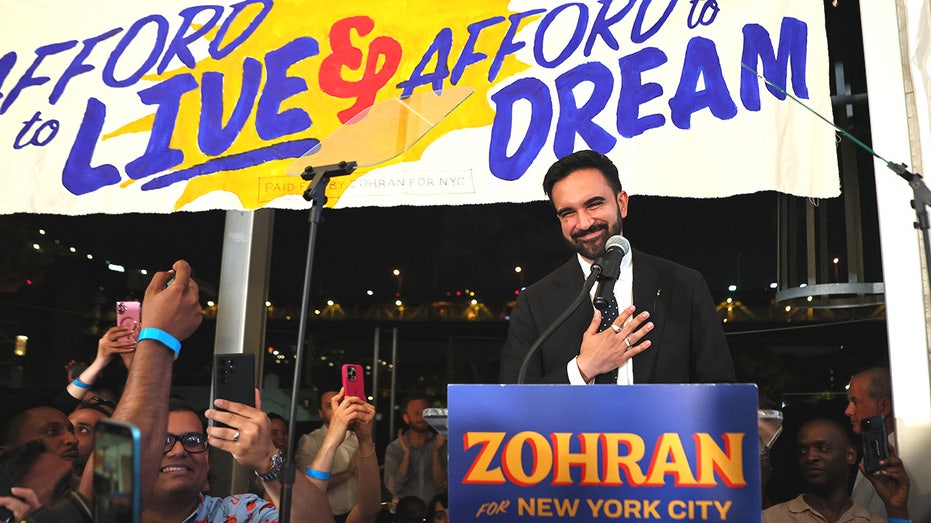
A tremor has run through American politics – the ascent of candidates labeled “socialist” in places like New York. But this isn’t a sudden shift; it’s the culmination of a quiet revolution in how young Americans view the world. A recent survey revealed a startling truth: 62% of those under 30 hold favorable views toward some form of what’s been termed “pop Marxism.” What forces have shaped this perspective?
After three decades in education, witnessing the evolving minds of students, a disturbing pattern has emerged. A fundamental disconnect exists – a vast ignorance of the 20th century’s most brutal ideologies. History lessons often leap from the defeat of Nazi Germany in 1945 directly to contemporary issues, leaving a gaping void in understanding the decades that followed.
The consequence is profound. Few students grasp the scale of communist atrocities – the systematic murder of an estimated 100 million people. They remain unaware of the courageous dissidents who resisted tyranny, or the sacrifices made to contain communism and safeguard democracy. This isn’t merely a historical oversight; it’s a critical failure to understand the price of freedom.
Pop Marxism’s allure lies in its deceptively simple promise: a world where everyone is cared for. But this stands in stark contrast to the experiences of previous generations. Today’s young adults often haven’t known the responsibility of earning their own way, of working part-time jobs to fund their desires – a movie ticket, a car, college tuition. They haven’t experienced the direct link between effort and reward.
Their summers are filled with curated experiences, “enrichment” activities, rather than the grit of real-world employment. They haven’t learned the value of customer service, of contributing to a community through work and volunteerism. Instead, they’ve grown up expecting a faceless bureaucracy to handle everything, leading to shock when confronted with the actual costs of independent living.
A fundamental shift in values is also at play. Older generations instinctively guarded their privacy, wary of government and corporate overreach – a sensitivity born from experiences with oppressive regimes. But today’s youth, raised in a hyper-connected world, have willingly traded privacy for convenience, sharing their lives online without a second thought.
They’ve grown up accustomed to the instant gratification of services like Amazon, demanding immediate efficiency. Concepts like due process, security, and careful deliberation seem archaic and frustrating. Democratic institutions, with their inherent checks and balances, appear slow and unresponsive, creating an opening for simplistic solutions and promises of ease.
This explains the appeal of candidates offering quick fixes, like the newly elected mayor who pledged to simply “lower costs and make life easier.” But beneath the surface lies a deeper skepticism about the American experiment itself. The Founders believed in individual morality and the protection of fundamental rights against all forms of tyranny.
Today’s students often equate democracy with unrestrained majority rule, believing that whatever the majority votes for is, by definition, right. This ignores the Founders’ warning of the “tyranny of the majority” – a society where moral truths are sacrificed at the altar of popular opinion. Even the foundational principles of free markets and limited government are viewed with suspicion.
Furthermore, a disturbing lack of awareness exists regarding the world’s most dangerous regimes. While quick to champion social justice causes, few students actively support victims of oppression in places like Cuba, North Korea, or Venezuela. The horrors perpetrated by the Chinese Communist Party – organ harvesting, forced sterilization, the Uyghur concentration camps – remain largely unknown, obscured by platforms like TikTok.
The truth is, these young adults haven’t been taught a complete picture. They’ve been led to expect that authority figures will provide everything, creating a life of comfort and ease. But there is hope. We’ve seen the power of education in combating hatred, as evidenced by our success in condemning Nazism and the Holocaust.
We must apply the same rigor to teaching the true cost of communist ideology. The images of Marx, Stalin, and Che Guevara should be as repulsive as those of Hitler. The hammer and sickle should be recognized as symbols of oppression, just as abhorrent as the swastika. Simultaneously, we must reclaim and revitalize the American story – its triumphs and its struggles – for a new generation.
It’s not too late to instill a deeper understanding of history, responsibility, and the enduring values that underpin a free society. We can, and we must, do better. The future of our nation depends on it.