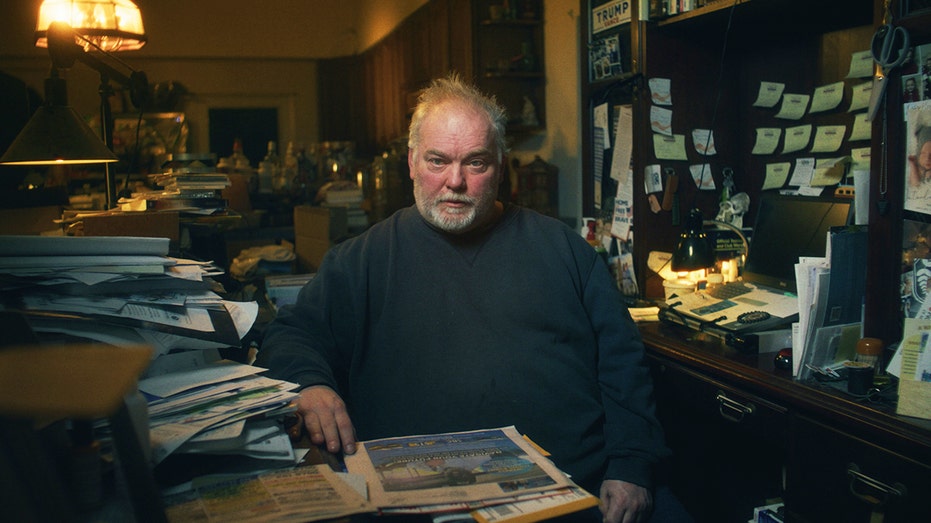
On Halloween Eve, 2018, a shovel struck something unexpected in the basement of a Long Island home – not plastic pumpkins or forgotten toys, but the chilling echo of bone and decaying fabric. Chris Carroll, helping his father, Michael, with a long-planned excavation, felt a cold shock run through him. “Dad, I think I found something,” he uttered, unaware of the decades-old secret about to surface.
For months, Michael Carroll had been digging, driven by a lifelong ache for answers. A recent stroke had weakened him, making the task physically impossible without his sons’ help. He’d lived with a haunting question his entire life: what happened to his father, George Carroll? The discovery in the basement wasn’t just a find; it was the potential end of a fifty-year silence.
The unearthed remains were identified as George Carroll, a Korean War veteran who vanished in 1963. His disappearance had always been shrouded in whispers and half-truths. Dorothy Carroll, George’s wife, had simply said he’d gone for cigarettes and never returned, fueling rumors of a new life begun in Korea. Remarkably, George was never officially reported missing, leaving a void that stretched across generations.
Patricia Gillespie, a documentary filmmaker, stumbled upon the Carroll family’s story in a local newspaper. Intrigued by their relentless search, she sought out Michael Carroll just days after the discovery. She found a man grappling with a past he barely knew, standing beside a gaping hole in his basement – a physical manifestation of a lifetime of unanswered questions.
For years, Michael and his sister, Jean Kennedy, were dismissed as obsessed, their inquiries met with skepticism. “Your dad left. Why can’t you accept this?” they were told repeatedly. But they refused to let the story fade, convinced something far more sinister had occurred. Their quest wasn’t just about finding a missing person; it was about uncovering a web of family secrets and long-buried truths.
The war had changed George. Returning home to a bustling family after the horrors of Korea proved a difficult transition. The unspoken trauma of combat, coupled with the demands of fatherhood, created a silent struggle. Yet, his children remembered a loving father, or at least, the idealized memory of one. This fractured image fueled their determination to understand his fate.
In 2010, Kennedy, a firm believer in the supernatural, consulted a psychic. The psychic’s chilling prediction – that George had been murdered and buried in the basement – seemed outlandish, yet it resonated with a deep-seated intuition. Despite her brother’s skepticism, Kennedy convinced him to begin digging, a desperate gamble for closure.
The initial police response was dismissive, treating the call as a prank. But Michael Carroll’s persistence forced them to investigate. What they found several feet below the basement floor confirmed the psychic’s grim prophecy: skeletal remains, and evidence of a fractured skull caused by blunt-force trauma. George’s death was officially ruled a homicide.
Suspicion quickly fell on Richard Darress, George’s handyman and later, Dorothy’s second husband. He’d entered the family’s life shortly before George’s disappearance and remained a shadowy figure for decades. The Carroll siblings recalled a history of physical and sexual abuse, painting a disturbing portrait of a man capable of violence.
Richie Darress, Richard’s son, found himself in an impossible position. Torn between loyalty to his father and the pain of his siblings, he made a courageous choice. He believed them, prioritizing their feelings over his own, and offering a rare glimpse of strength amidst the turmoil. He understood the need to confront the darkness, even if it meant facing uncomfortable truths about his own father.
Richard Darress died in 2018, before he could be questioned about George’s disappearance. He’d spent his final years living in Mexico, just across the border from Laredo, Texas. The truth, it seemed, had died with him, leaving behind a legacy of pain and unanswered questions.
Despite the revelations, the Carroll siblings remained fiercely protective of their mother, Dorothy. She had always maintained that George wasn’t “a good guy,” but they refused to believe she was involved in his death. Their unwavering love for her, even in the face of unsettling possibilities, underscored the complex dynamics of their family.
In 2019, George Carroll finally received a proper burial with full military honors. Yet, even with his remains laid to rest, the mystery lingered. The police acknowledged they might never know the full story of his death, leaving a haunting ambiguity at the heart of the case.
Recently, Michael Carroll’s son sent the filmmaker a photograph. The hole in the basement had been filled. It wasn’t just the end of a search; it was the beginning of a new chapter – a chance to grieve, to heal, and to honor the memory of a father lost for far too long. The story wasn’t simply about a disappearance; it was about the enduring power of family, the weight of secrets, and the long, arduous journey towards closure.