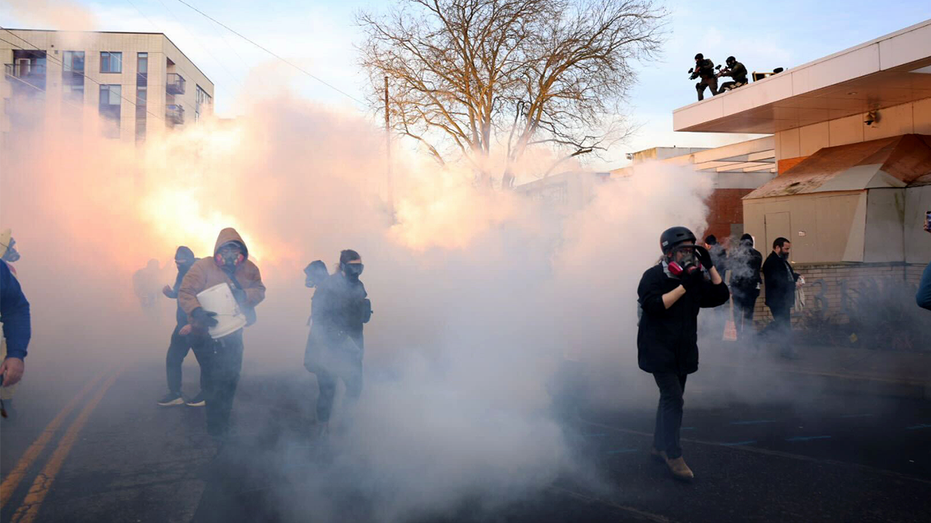
A federal judge has issued a temporary order restricting federal officers in Portland from deploying tear gas against protesters gathered outside an Immigration and Customs Enforcement building. The decision follows incidents where gas was used on crowds, including young children, despite descriptions of the gatherings as peaceful.
Judge Michael Simon specifically prohibited the use of chemical or projectile munitions against individuals who present no immediate physical threat, or those simply trespassing or failing to comply with dispersal orders. He further barred officers from targeting a person’s head, neck, or torso unless justified by the legal use of deadly force.
The judge’s order frames the current moment as a critical juncture for the nation, emphasizing the importance of free speech, independent journalism, and nonviolent protest within a constitutional democracy. He asserted the judiciary’s responsibility to uphold these principles and guide the nation back to its constitutional foundations.
This temporary restraining order will remain in effect for 14 days, stemming from a lawsuit filed by the American Civil Liberties Union of Oregon on behalf of protesters and journalists documenting the demonstrations. The suit alleges that the use of chemical munitions and excessive force represents unlawful retaliation against First Amendment rights.
The Department of Homeland Security maintains that federal officers have adhered to their training and employed only the minimum force necessary to ensure their safety, public safety, and the protection of federal property. They insist their actions are constitutional and aimed at upholding the rule of law.
Tensions have escalated in recent weeks between anti-ICE demonstrators and federal officers across the country, fueled in part by recent shooting deaths in Minneapolis. Previous court decisions regarding the use of tear gas and pepper spray in Minnesota and Chicago have been suspended or reversed by appeals courts.
The Oregon lawsuit details specific instances where federal officers allegedly used chemical munitions against plaintiffs, including a protester known for a distinctive chicken costume, an elderly couple in their eighties, and two freelance journalists. The complaint argues these actions treated peaceful protesters and those documenting events as “enemy combatants.”
Residents of an affordable housing complex near the ICE building have also filed suit, seeking to restrict tear gas use due to repeated exposure over the past year. Their concerns highlight the collateral impact of these tactics on innocent bystanders.
Portland’s mayor publicly demanded ICE’s departure from the city after federal officers deployed tear gas against a peaceful demonstration. He condemned the use of force, characterizing it as a violation of constitutional rights and a display of shame.
The mayor’s statement was a direct appeal to ICE employees, urging them to resign and to those directing the operation to leave the city. He challenged them to consider the moral implications of their actions, specifically questioning the use of force against children and the agency’s broader impact.
He implored those involved to reflect on their choices and the agency’s accountability, accusing them of prioritizing lies over truth and eroding public trust through their actions.