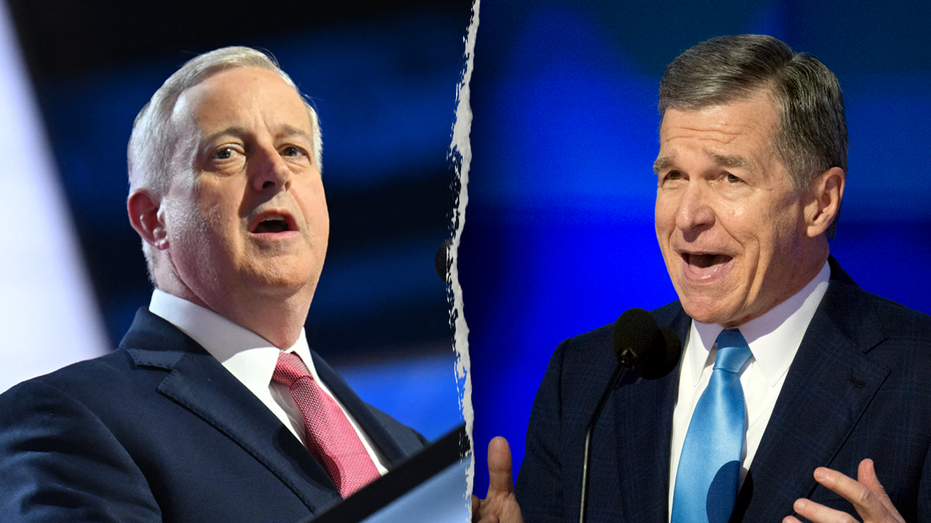
The battle for North Carolina’s Senate seat is set, with Michael Whatley, former Republican National Committee chairman, and ex-Governor Roy Cooper emerging as their parties’ nominees. This contest promises a fierce showdown, poised to significantly impact the balance of power in Washington.
Whatley secured the Republican nomination, while Cooper, a familiar face in North Carolina politics, easily won the Democratic primary. Both candidates were widely expected to advance, setting the stage for a general election in a state known for its political complexities.
Immigration policy has already become a central point of contention. Whatley has directly criticized Cooper’s repeated vetoes of legislation aimed at bolstering cooperation between local law enforcement and Immigration and Customs Enforcement (ICE).
Whatley argues that Cooper’s actions allowed individuals who could have been detained by ICE to remain free, contributing to public safety concerns. He pointed to recent ICE operations in Charlotte and the Triangle, which resulted in the apprehension of over 120 individuals.
During his time as governor, Cooper vetoed at least three bills crafted by the Republican-led legislature concerning ICE cooperation. He framed these vetoes as a rejection of policies designed to sow division and fear within the state.
Cooper’s campaign countered, highlighting opposition from sheriffs in key counties to the Republican proposals. They argued the legislation was hampered by a lack of resources, a problem exacerbated by Whatley’s support for cuts to local law enforcement funding.
The stakes are exceptionally high. A victory for Whatley would solidify the Republican hold on the seat currently held by retiring Senator Thom Tillis. However, a win for Cooper could jeopardize the Republican majority in the Senate.
North Carolina has a fluctuating history with Senate representation. The last Democrat to hold the seat was Kay Hagan, serving from 2009 to 2015. Before that, the state’s representation was split between a Republican and John Edwards, whose career was later overshadowed by scandal.
This November’s election will be a crucial test of each candidate’s ability to resonate with North Carolina voters and navigate the state’s unique political landscape. The outcome will undoubtedly have far-reaching consequences for the future of the Senate.


