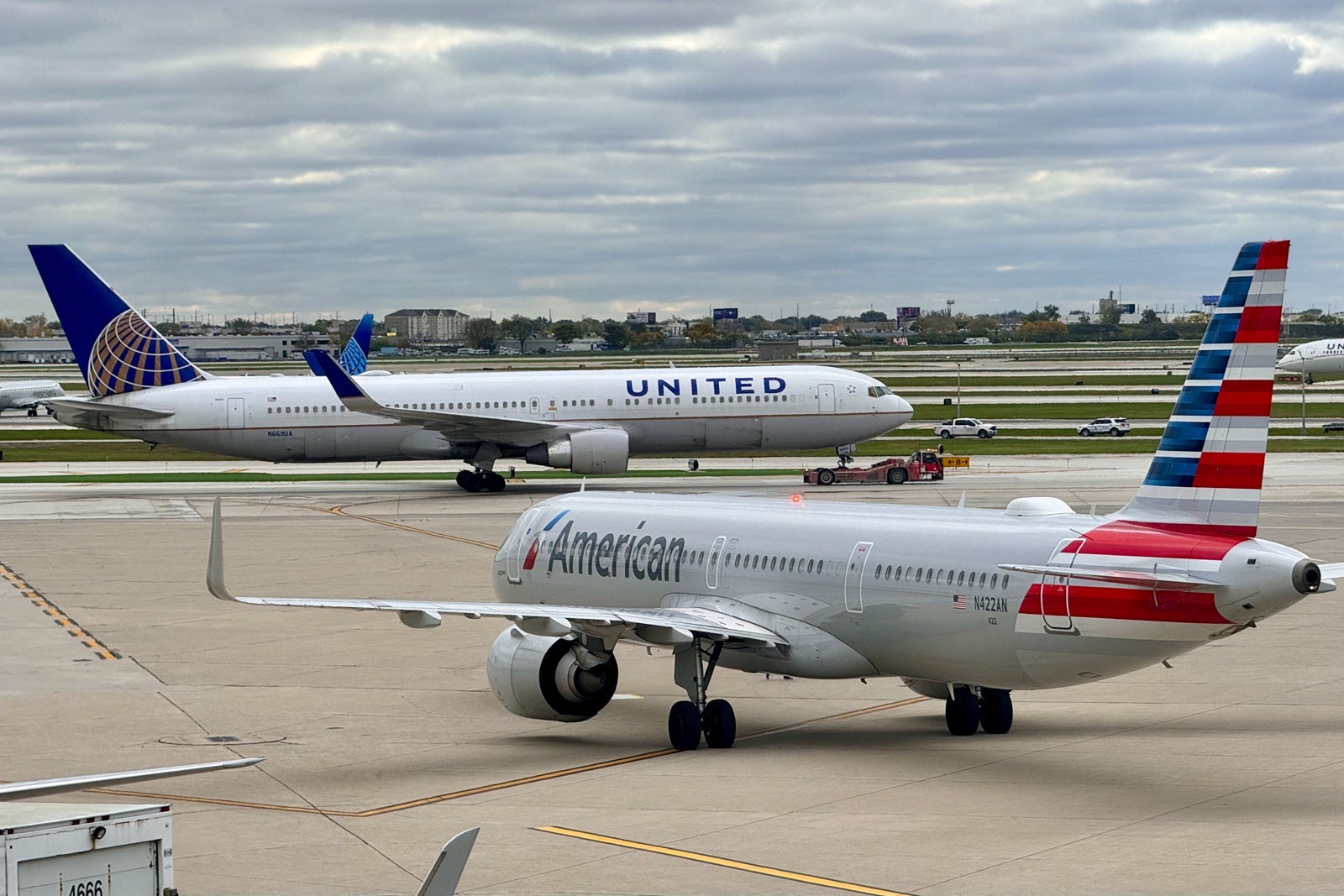
A quiet battle for control of the skies over Chicago is reaching a boiling point. For years, American Airlines and United Airlines have been locked in a fierce competition for dominance at O’Hare International Airport, a struggle now threatening to disrupt travel for countless passengers.
This summer, the rivalry escalated into a full-blown scheduling war. Both airlines aggressively added flights, not to meet passenger demand, but to secure valuable gate access – a critical asset in the bustling airport. The stakes are incredibly high, with years of strategic positioning and financial investment hanging in the balance.
The Federal Aviation Administration has now intervened, issuing a stark warning: O’Hare is nearing its breaking point. The regulator has determined that the current flight schedules exceed the airport’s capacity, risking widespread delays, cancellations, and a frustrating experience for travelers. A cap on daily operations is imminent.
The root of the conflict lies in a 2018 agreement designed to fairly allocate gate space. This “use-it-or-lose-it” formula, paused during the pandemic, recently went into effect, shifting gates from American to United. While American is poised to regain some ground, United’s CEO made it clear they would defend their gains at all costs.
United’s response was immediate and calculated. They launched a series of new routes and increased frequencies, a move American executives decried as a deliberate attempt to manipulate the system. The accusation? United was prioritizing gate control over the needs of passengers and the smooth operation of the airport.
This isn’t simply about adding flights; it’s a decades-long power struggle. The battle for O’Hare dates back to the 1980s, when airlines began establishing hub airports. United believes American is operating an unprofitable hub at O’Hare and has even launched a public relations campaign in Chicago to bolster its local image.
Despite the aggressive tactics, few believe American will abandon its Chicago base. The airport is too strategically important. A compromise, a renewed understanding between the two giants, seems the most likely outcome. However, the immediate crisis demands action.
The FAA has called for an emergency meeting with airline executives in Washington, D.C., to determine how to reduce the overloaded schedule. The challenge lies in deciding how to fairly distribute the cuts. Should it be based on current flight share, or historical data?
Analysts predict that airlines will likely reduce regional flights and consolidate frequencies, utilizing larger aircraft to maintain capacity while optimizing gate usage. This strategy proved effective when the FAA imposed similar restrictions at Newark Liberty International Airport.
The situation at O’Hare is a stark reminder of the complex dynamics within the airline industry. It’s a story of competition, strategy, and the delicate balance between airline ambitions and the traveling public’s need for reliable air travel.