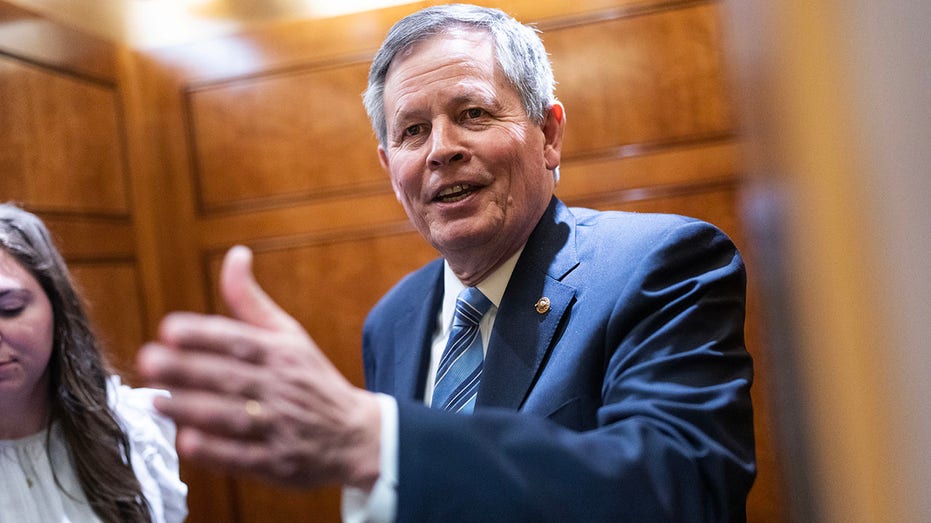
A political tremor shook Montana Wednesday as Senator Steve Daines announced he will not seek reelection, a decision revealed just moments before the filing deadline. The unexpected move throws a crucial Senate seat into play, reshaping the landscape of the upcoming election cycle.
Daines, a Republican serving his second term, was widely considered a lock for a third. His state strongly favored Donald Trump in the recent presidential election, and his leadership role as chair of the National Republican Senatorial Committee signaled a secure position within the party. This departure is a significant surprise to many observers.
In a brief video statement, Daines expressed a desire to focus on family. He warmly acknowledged his wife, Cindy, and their shared anticipation of “cherishing moments with seven grandchildren” and enjoying more time in their home state. The decision appears deeply personal, a longing for a different pace of life.
The timing of the announcement sparked immediate action. Montana U.S. Attorney Kurt Alme filed for the seat just before Daines’ withdrawal, while former University of Montana President Seth Bodnar entered the race as an independent. The field is rapidly taking shape in the wake of the senator’s decision.
Former President Trump quickly endorsed Alme, praising Daines’s years of service and framing the transition as a “passing of the torch.” Trump lauded Alme’s previous role as a U.S. Attorney, highlighting his loyalty and commitment to the “America First” agenda.
The Democratic Senatorial Campaign Committee seized on the news, portraying Daines’s departure as a sign of Republican vulnerability. They suggested a growing sense of unease among GOP senators facing challenging reelection prospects, framing it as a “toxic record” driving incumbents to retire.
Daines’s exit follows a similar announcement from Representative Ryan Zinke, also of Montana, who revealed his plans to retire from the House earlier this week. Zinke cited undisclosed surgeries related to injuries sustained during his time as a Navy SEAL, prioritizing consistent representation for his constituents.
Zinke’s open seat has already attracted a competitive field of Republican contenders, including Montana Secretary of State Christi Jacobsen and conservative radio host Aaron Flint. Both have secured endorsements from Zinke and Trump, signaling a fierce primary battle ahead.
Montana’s primary elections are scheduled for June 2nd, setting the stage for a pivotal contest that will determine who will succeed Senator Daines. The outcome will undoubtedly have significant implications for the balance of power in the Senate.
The sudden shift in Montana’s political landscape underscores the unpredictable nature of electoral politics. With two prominent Montana representatives stepping down, the state is poised for a period of intense political maneuvering and a reshaping of its congressional delegation.

![BETO'S BOMBSHELL BACKING: This Texas Candidate Just Became UNSTOPPABLE! [VIDEO]](https://www.thegatewaypundit.com/wp-content/uploads/2026/03/beto-orourke-msnow-1200x630.jpg)


