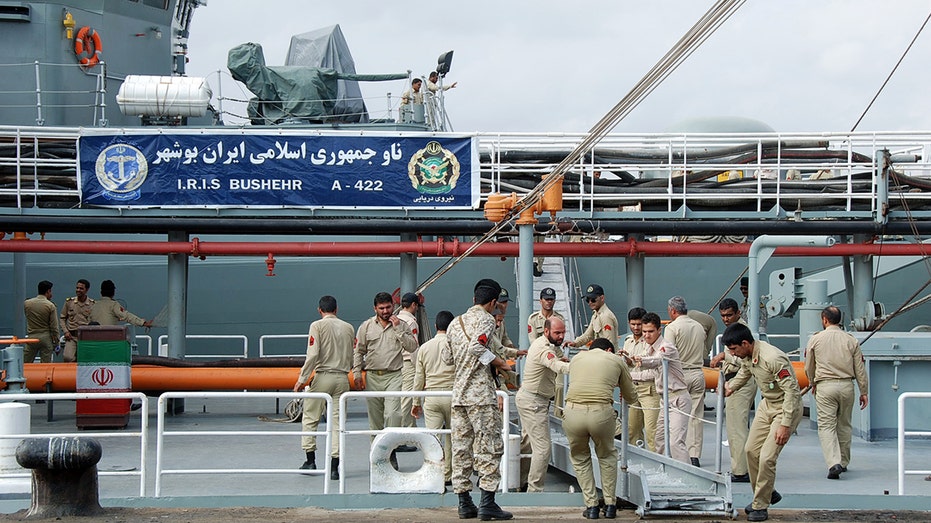
A crippled Iranian vessel, the IRIS Bushehr, limped into Sri Lankan waters Friday, discharging over 200 crew members after a catastrophic engine failure. The arrival follows a dramatic escalation in regional tensions, just days after a U.S. submarine delivered a decisive blow to another Iranian warship.
The IRIS Bushehr, previously identified in Iranian reports as a naval logistics ship, is currently anchored in the port of Colombo. Sailors underwent immediate medical evaluations and immigration processing before being transferred to a naval base in Welisara. The situation is far from routine, demanding careful consideration of international maritime law.
Sri Lankan President Anura Kumara Dissanayake acknowledged the gravity of the situation, stating the need to balance humanitarian obligations with adherence to international treaties. Following discussions with Iranian officials and the ship’s captain, authorities have taken control of the vessel, preparing for its tow to Trincomalee on the northeast coast.
This incident unfolds in the wake of the sinking of the Iranian warship IRIS Dena off Sri Lanka’s coast on Wednesday. U.S. Secretary of War Pete Hegseth declared it the first enemy ship lost to a torpedo since World War II, a stark demonstration of naval power.
Initial distress signals from the Dena prompted a swift response from both the Indian and Sri Lankan navies. Despite the deployment of aircraft and vessels, rescue efforts yielded a grim outcome: 32 sailors were rescued, but 87 bodies were recovered from the wreckage.
Iran’s Foreign Minister Abbas Araqchi issued a fiery condemnation, vowing retribution for the sinking of the Dena. He described the attack as an “atrocity” committed in international waters against a vessel carrying nearly 130 sailors and operating as a guest of the Indian Navy.
According to Joint Chiefs of Staff Gen. Dan Caine, the U.S. Navy achieved “immediate effect” with a single Mark 48 torpedo, “effectively neutralizing” the Iranian warship and sending it to the ocean floor. The precision and speed of the operation underscored the advanced capabilities of the American submarine fleet.
The sequence of events – a crippled ship seeking refuge, a sunken warship, and escalating rhetoric – paints a picture of a rapidly deteriorating situation in the Indian Ocean. The region now holds its breath, bracing for potential repercussions from Iran’s promise of a forceful response.