
The anticipation surrounding the MacBook Neo was thick with skepticism. Before its unveiling, many predicted a price point far beyond reach, a continuation of Apple’s premium pricing strategy. The prevailing online sentiment declared it destined to fail, a non-starter in a crowded market.
Apple defied expectations, revealing a strikingly affordable laptop – $599, or even $499 for students. This wasn’t a stripped-down compromise; it boasted 256GB of storage, 8GB of RAM, the beloved Magic Keyboard, a crisp 1080p webcam, immersive Spatial Audio, and a beautifully crafted aluminum design. It arrived in colors unseen on a Mac for decades, specifically targeting those comfortable with budget Chromebooks or Windows PCs.
Yet, the initial reaction online was overwhelmingly negative. Social media feeds erupted with criticism, portraying the MacBook Neo as overpriced and underpowered, a poor value compared to competing Windows laptops. The narrative quickly became one of outrage, fueled by a chorus of “expert” opinions.
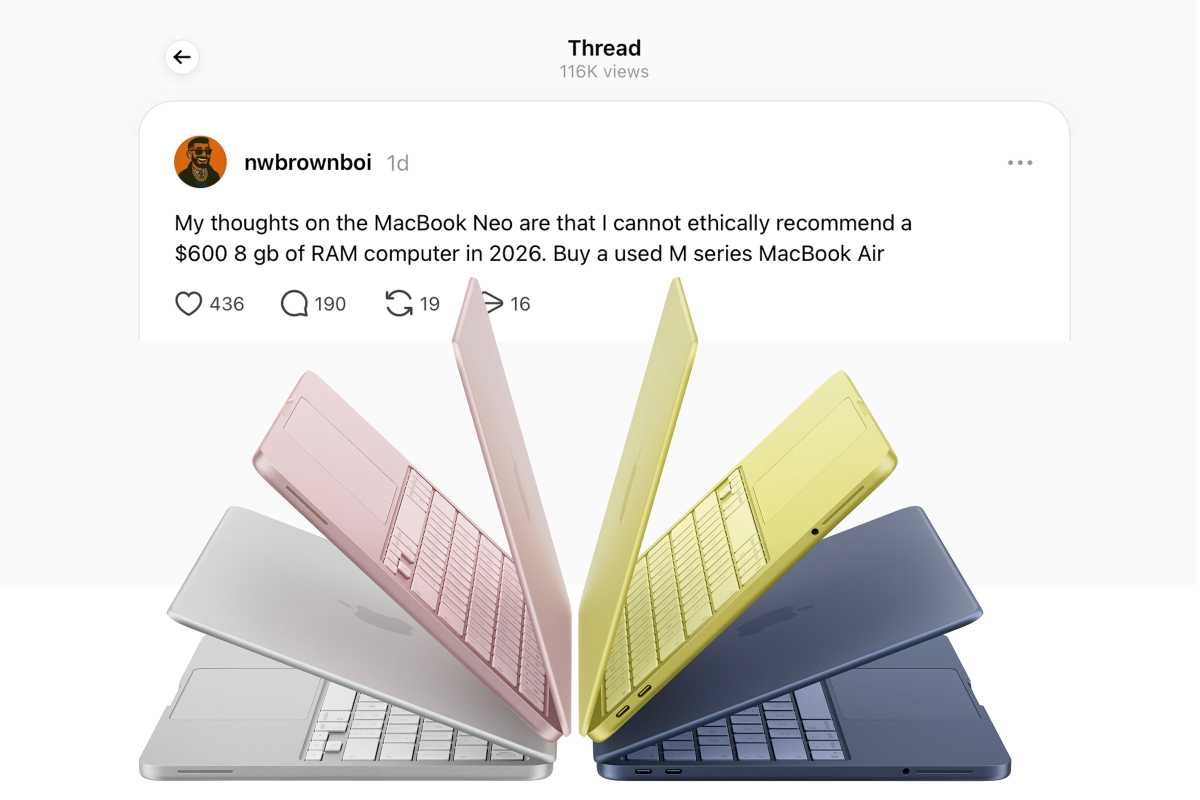
But the outrage was built on a foundation of misinformation. A post circulating widely highlighted perceived shortcomings – 8GB of RAM, lack of Touch ID on the base model, a non-backlit keyboard. The argument centered on the idea that an older MacBook Air would be a superior choice.
This advice is deeply flawed. Any available M2 or M3 Air would likely be a refurbished unit, and an M4 model would carry a significant price premium. Ironically, the very M2 Air that was once criticized for its $1,099 starting price is now being championed as a better alternative, simply because some influencers refuse to acknowledge Apple’s success with the Neo.
While improvements are always possible – more RAM, a higher-resolution display – those aren’t the goals of this machine. The MacBook Neo isn’t designed to compete with higher-end models; it’s built for a different audience. The relentless criticism stems from a deliberate distortion of facts.
There are legitimate points to consider. The restriction of Touch ID to the $699 model does force a compromise on security. The trackpad lacks the advanced features of Force Touch. And the absence of a backlit keyboard is a noticeable omission. However, these are being amplified into a narrative of failure, overshadowing the Neo’s strengths.
The reality is that comparable used MacBook Airs will offer the same base specifications – 256GB storage, 8GB RAM, a 13-inch display – and will be outside of Apple’s warranty. Updates will cease sooner, and the risk of cosmetic damage is high. The claim of finding a superior used Air for $600 is simply untrue.
The MacBook Neo is strategically aimed at users currently entrenched in the Windows and Chromebook ecosystems, particularly students. Apple has created a machine that delivers a compelling experience through design, camera quality, audio, and display, even with modest internal specifications. Comparisons to Windows PCs are inevitable, but often misleading.
Take, for example, a widely shared post showcasing an ASUS laptop with an OLED display, 16GB of RAM, and a larger SSD. The claim? It offers superior value. The deception? The ASUS laptop retails for $999, significantly more than the MacBook Neo. Similar inaccuracies plague other comparisons.
Another example highlighted a Windows PC boasting more RAM, storage, a larger screen, and a numpad. This machine, frequently cited in criticisms, was actually used by Apple at a product event – not to demonstrate performance, but to showcase the Neo’s superior design and user experience.
Yes, 16GB of RAM is preferable to 8GB. Yes, a 15.6-inch screen is larger than 13 inches. But Apple didn’t intend for the MacBook Neo to win a spec-sheet war. Windows laptops have consistently offered superior specifications for the same price point, a fact well-known within the tech community. The current wave of criticism is driven by a desire for engagement, not objective analysis.
If you found yourself questioning the MacBook Neo after encountering these criticisms, it’s a strong indication that it’s the right machine for you. It wasn’t designed for tech influencers; it’s an accessible MacBook built for students, families, and those unfamiliar with the complexities of USB standards.
Apple has delivered a remarkable value. And anyone attempting to convince you otherwise is either misinformed or deliberately misleading you.


