Rafael Grossi, the head of the International Atomic Energy Agency, is preparing to present a bold vision for the United Nations – a call for renewed leadership in a world teetering on the brink of instability. Known in Argentine diplomatic circles as “the nuclear Pope,” a playful nod to his compatriot Pope Francis, Grossi believes the UN must adapt to a dramatically shifting global landscape.
His conviction stems from years spent navigating international crises, from the volatile situations in the Middle East, Iran, and Syria, to the ongoing conflict between Russia and Ukraine. He argues this experience uniquely positions him to address the UN’s current weaknesses, pointing to a disturbing pattern: the absence of the UN’s influence in hotspots like Gaza, South Sudan, the Caucasus, and even Cambodia.
Grossi’s core proposal centers on reclaiming the UN’s fundamental role in maintaining peace and international security. He insists on restoring its credibility and effectiveness, believing it’s a responsibility the organization has abandoned. The stakes, he emphasizes, are incredibly high, as even historically peaceful regions like Latin America now face escalating tensions.
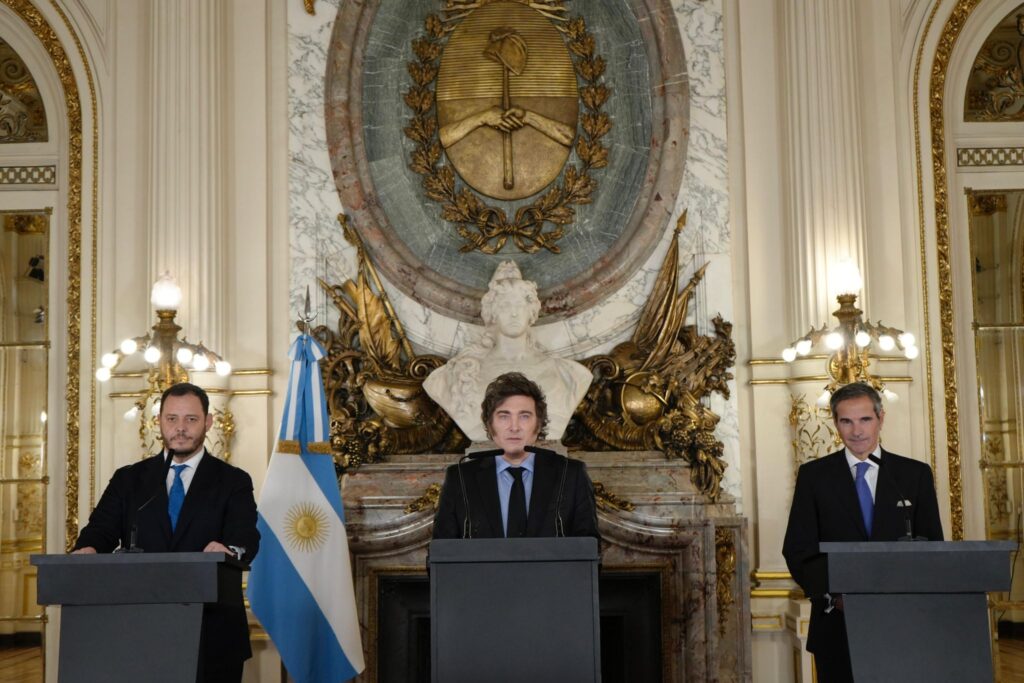
The weight of his responsibilities is underscored by the death threats he received during the recent conflict between Israel and Iran, necessitating ongoing personal security. He also expresses deep concern over the precarious state of the Zaporizhzhia nuclear plant in Ukraine, a situation he’s actively working to mitigate through constant dialogue with both sides.
Grossi observes a significant shift in economic power towards Asia, with nations like China, India, and Japan driving global GDP. However, he cautions against a simplistic view of a “power shift,” stressing that economics and politics are inextricably linked. In a world riddled with conflict, a purely economic analysis is insufficient; a robust international political perspective is essential.
Regarding Argentina’s nuclear program and its strong ties with the United States under President Milei, Grossi firmly dismisses concerns about a loss of sovereignty. He asserts that cooperation agreements do not equate to surrendering control, characterizing such claims as disproportionate. He remains optimistic about Argentina’s nuclear capabilities, highlighting its existing power plants, design expertise, and export potential.
However, his assessment of the global nuclear landscape is deeply troubling. He warns of a “revival of nuclear deterrence,” with nuclear-weapon states modernizing their arsenals while other nations consider acquiring nuclear capabilities as a deterrent. While debating whether this constitutes a new arms race, he acknowledges the growing nuclear dimension of international tensions.
Grossi readily addresses accusations of bias, acknowledging they are an inherent part of his role. He’s been labeled both a “Zionist puppet” and a supporter of Russia, a testament to his commitment to engaging with all parties. He views this criticism as the price of effective diplomacy, prioritizing the prevention of nuclear accidents and the protection of the global nonproliferation regime.
He openly acknowledges the trauma of the death threats he’s received, but remains resolute. Despite the credible danger, he refuses to be intimidated, recognizing that yielding to threats would be a profound failure. His dedication is particularly evident in his efforts to repair the critical external power lines to the Zaporizhzhia nuclear plant, a feat achieved through painstaking mediation between Russia and Ukraine.
Grossi paints a picture of a world “marked by unprecedented phenomena” – the return of conventional warfare to Europe, crises in the Middle East and Africa, and escalating tensions in the Indo-Pacific. He also points to the increasing use of tariffs as political tools and the erosion of long-standing alliances, particularly between the US and China. The common thread, he says, is fragmentation, polarization, and conflict.
This reality, he believes, demands a reimagining of the UN’s role, requiring it to collaborate with emerging geopolitical groups like the G20, BRICS, and the Shanghai Cooperation Organization. He emphasizes the need to actively shape the geopolitical landscape to avoid further conflict, viewing diplomacy as the essential tool for navigating this complex world.
Grossi’s vision isn’t one of easy solutions, but of pragmatic experience forged in the crucible of international crises. He insists his candidacy is rooted not in theoretical ideals, but in the hard-won lessons of managing high-stakes situations. His success hinges on whether this message resonates with an increasingly divided international community.
The ultimate decision rests with the UN Security Council, and Grossi faces a formidable challenge from Michelle Bachelet, a former Chilean president. The race to become the second Latin American secretary-general is a pivotal moment, offering an opportunity to bring renewed leadership to an organization grappling with unprecedented global challenges.