A nation holds its breath. Over a week has passed since Honduras went to the polls, yet the identity of its next leader remains shrouded in uncertainty.
The November 30th election delivered a stunning deadlock, pitting center-right contender Salvador Nasralla against the far-right Nasry Asfura in a race too close to call.
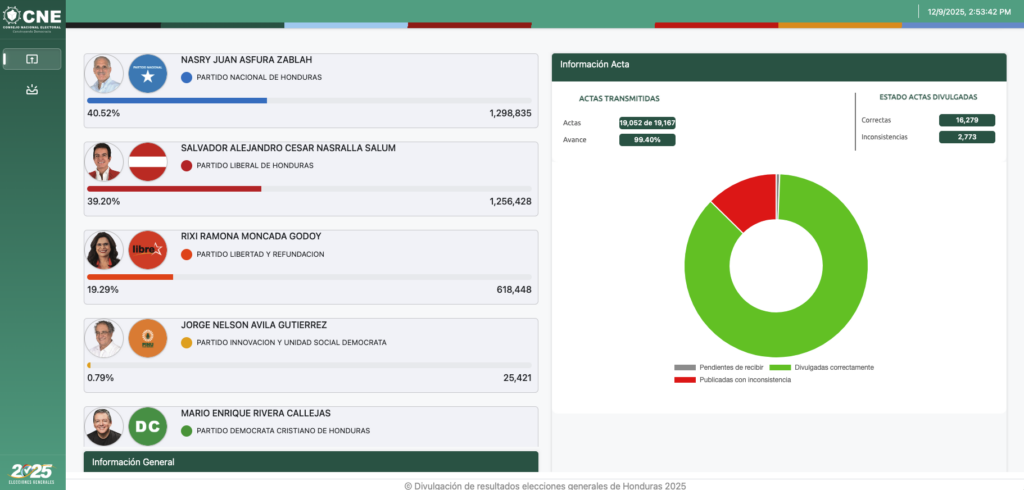
Honduras’ National Electoral Council (CNE) was granted a month to meticulously recount the ballots, a process initially stalled for three days before resuming. As of Tuesday, Asfura held a narrow lead with 40.53% of the vote, followed by Nasralla at 30.16%, with nearly all votes tallied.
The atmosphere is thick with suspicion. Nasralla has vehemently alleged widespread fraud, pointing to repeated system failures during the vote tallying as evidence of manipulation. He claims the system crashed while entering results from key departments, a moment he believes was exploited to alter the outcome.
“This is theft,” Nasralla declared, expressing the desperation felt by his team. He alleges discrepancies between the actual votes received by the National Party and the numbers being reported, suggesting a deliberate effort to undermine the democratic process.
Nasralla is demanding a recount in several departments – Lempira, Intibucá, La Paz, Copán, and Santa Bárbara – citing a disturbing pattern of irregularities and a failure to utilize biometric identification, raising further questions about the integrity of the count.
The stakes are incredibly high. Nasralla, a well-known television personality, finds himself on the verge of defeat against Asfura, who received a significant endorsement from former U.S. President Donald Trump just days before the election.
Trump’s involvement has added another layer of complexity to the situation. He publicly stated that U.S. aid to Honduras would be contingent on Asfura’s victory, and recently pardoned a former Honduran president convicted of drug trafficking, fueling accusations of foreign interference.
Rixi Moncada, the candidate backed by current President Xiomara Castro, has also rejected the preliminary results, denouncing U.S. meddling and calling for a complete annulment of the election. The situation is rapidly escalating into a full-blown political crisis.
The CNE President, Ana Paola Hall, insists the voting data has been updated following a technical review and external audit, urging candidates to file any appeals they deem necessary. However, trust in the process is eroding with each passing hour.
Honduran law grants the CNE the authority to declare a recount or even call for new elections. As the 30-day deadline approaches, the future of Honduras hangs precariously in the balance, a nation waiting for a resolution that may never come.