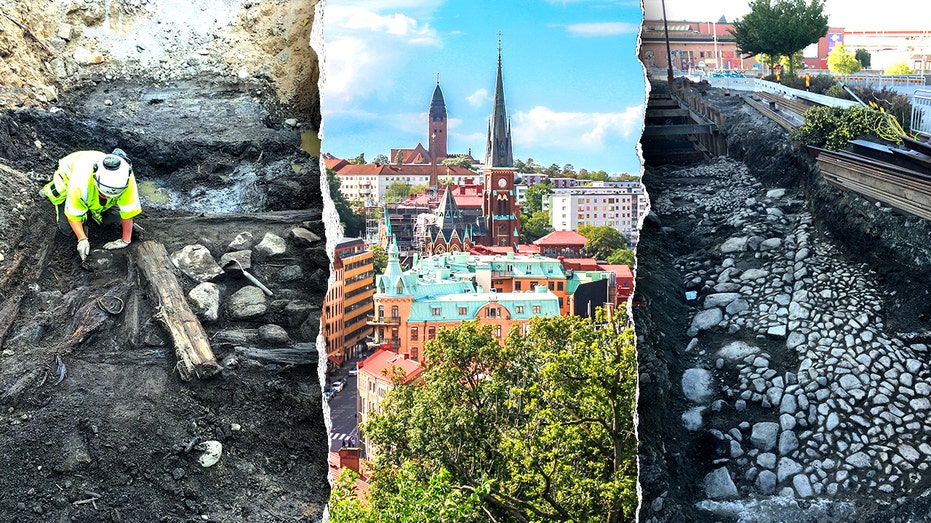
Beneath the bustling streets of modern Gothenburg, Sweden, lies a ghost of the past – the remarkably preserved remains of Nya Lödöse, a 16th-century city lost to time. Recent excavations have begun to reveal the secrets of this once-thriving port town, a place deliberately built to challenge Danish dominance and forge a new Swedish identity.
Founded in 1473 by Swedish regent Sten Sture the Elder, Nya Lödöse quickly became a vital hub for trade, drawing merchants from across Western Europe to its strategic location near the North Sea. Imagine a bustling marketplace, filled with the sounds of bartering and the scent of goods from distant lands – a vibrant center of commerce and ambition.
Yet, its prosperity was fleeting. By 1624, Nya Lödöse was largely abandoned, overshadowed by the rising power of Gothenburg. For centuries, the city faded into legend, its story buried beneath layers of earth and forgotten memories. Now, painstaking archaeological work is bringing it back to life.
The layout of Nya Lödöse, as revealed by the dig, mirrored a typical medieval market town. A grid of streets radiated from a central marketplace, anchored by a town hall. Houses, primarily constructed of wood, were surprisingly uniform in size and style, suggesting a community built on practicality rather than ostentatious displays of wealth.
While the structures themselves were modest, the artifacts unearthed paint a vivid picture of daily life. A single leather glove, a repurposed wooden barrel, and fragments of imported ceramics offer intimate glimpses into the routines and possessions of the town’s inhabitants. These weren’t the grand treasures of royalty, but the tangible remnants of everyday existence.
One particularly striking find – pieces of a mid-16th century pocket watch – hints at a level of sophistication and technological advancement previously unexpected in this remote trading post. It’s a small object, yet it speaks volumes about the connections Nya Lödöse had to the wider world.
Archaeologists have meticulously uncovered streets, at least 39 individual plots, the bustling port area, and even the city’s fortifications – a moat, a rampart, and the remnants of carefully tended gardens. This isn’t just a collection of ruins; it’s a remarkably complete snapshot of a 16th-century urban environment.
The establishment of Nya Lödöse was deeply intertwined with the political tensions of the era, a period marked by Sweden’s struggle for independence from Denmark. Its location, while advantageous for trade, also made it vulnerable to conflict. Ultimately, the need for greater security led to its replacement by the heavily fortified city of Gothenburg.
The sheer volume of material recovered – spanning a mere 150 years of the town’s existence – provides an unparalleled opportunity for researchers. They can now examine the built environment in extraordinary detail and reconstruct the lives of those who once called Nya Lödöse home.
This excavation is more than just a historical dig; it’s a window into a pivotal moment in European history. The 16th century was a time of immense change – the discovery of the Americas, the Reformation, and the rise of powerful nation-states. Nya Lödöse, though short-lived, existed at the heart of this transformation.
Recent months have seen other remarkable discoveries across Sweden, including a medieval monastery uncovered by a history enthusiast with a metal detector and a substantial medieval treasure hoard found by an angler. These finds underscore the rich and often hidden history that lies just beneath the surface of the Swedish landscape.