The year 2025 witnessed a seismic shift, a moment when artificial intelligence irrevocably altered the course of human existence.Timemagazine recognized this turning point, naming the “Architects of Artificial Intelligence” as its Person of the Year – a collective acknowledgment of the minds shaping our future.
The magazine’s cover imagery powerfully captured the scale of this revolution. Tech visionaries, including Elon Musk and Mark Zuckerberg, were depicted perched precariously on a steel beam high above New York City, a modern echo of the iconic “Lunch Atop a Skyscraper” photograph. It symbolized both the ambition and the inherent risk of building something monumental.
Another striking image showcased the letters “AI” constructed from intricate computer components, surrounded by scaffolding. This visual metaphor conveyed the ongoing, laborious process of assembling this powerful new intelligence, a structure constantly under construction and refinement.
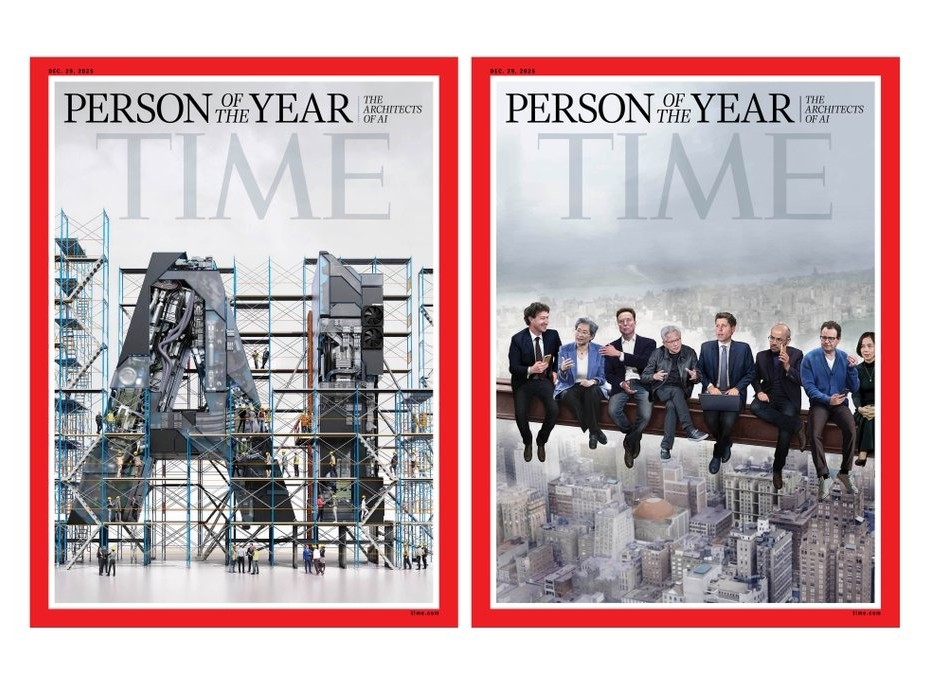
Timedeclared these individuals responsible “for delivering the age of thinking machines, for wowing and worrying humanity, for transforming the present and transcending the possible.” The statement wasn’t simply celebratory; it acknowledged the complex, often unsettling implications of this technology.
Artificial intelligence, at its core, empowers machines to learn from data, recognize patterns, and make decisions with increasing autonomy. 2025 was the year this potential exploded into reality, leaving no doubt that the world had entered a new era.
An accompanying feature delved into the leadership behind the AI surge and its projected impact on the world. Jensen Huang, CEO of NVIDIA, articulated the pervasive nature of this technology: “Every industry needs it, every company uses it, and every nation needs to build it.” He boldly proclaimed it the “single most impactful technology of our time.”
Alongside Musk and Zuckerberg, the cover highlighted key figures like Sam Altman of OpenAI, Lisa Su of Advanced Micro Devices, Demis Hassabis of DeepMind, Dario Amodei of Anthropic, and Fei-Fei Li, a pioneering computer scientist. These individuals represent the diverse forces driving the AI revolution.
The year saw an unprecedented influx of capital and resources dedicated to AI development, fueling the construction of massive data centers across the United States. This investment signaled a global commitment to harnessing the power of artificial intelligence.
According toTime’s editor in chief, Sam Jacobs, 2025 marked a point of no return. The relentless advancement of AI permeated every aspect of life, from accelerating medical breakthroughs to reshaping productivity. It became impossible to ignore its influence.
However, Jacobs also acknowledged the disruptive potential of AI, recognizing its impact on individuals and society. Parents and educators grappled with its use by students, while business leaders confronted its transformative effects on the economic landscape.
The immense energy demands of AI data centers and the concentration of wealth within the industry’s leading companies raised critical questions about sustainability and economic equity. The rapid growth fueled concerns about a potential economic bubble, a gamble of epic proportions.
AI companies are now inextricably linked to the global economy, their fortunes and failures impacting nations worldwide. The future remains uncertain, but one thing is clear: the age of artificial intelligence has arrived, and its architects are shaping a world unlike any seen before.