A wave of ideological battles is escalating across American schools and universities, revealing a landscape of increasingly polarized viewpoints. From high school locker rooms to college classrooms, students and educators are finding themselves at the center of contentious debates that challenge fundamental principles of fairness and free expression.
In Washington state, high school athletes Sadie Sullivan and Ahnaleigh Wilson are courageously challenging a policy allowing transgender athletes to compete in girls’ sports. Sullivan powerfully stated, “Girls should never have to feel uncomfortable in their own locker room,” articulating a growing concern about privacy and safety. Wilson directly confronted state leaders, asserting, “You have stood up for transgender athletes, but you have not stood up for us. We matter too.”
The University of Oklahoma became ground zero for another clash when a student received a failing grade for invoking religious beliefs in an essay questioning non-binary gender theory. The resulting uproar led to administrative leave for both the teaching assistant and a professor who defended him, highlighting the delicate balance between academic freedom and ideological expression. A subsequent complaint revealed a disturbing pattern: excused absences were offered for protesting *in favor* of the assistant, but denied to those wishing to counter-protest.
Concerns extend beyond college campuses. In Alaska, Veterans Day was conspicuously absent from the official school calendar, replaced with a “student release professional development day.” A gubernatorial candidate condemned the omission as “absolutely unacceptable,” pointing to a broader trend of what she calls “forced, woke ideology” infiltrating the education system. The district also recently faced criticism for disclaiming responsibility for the viewpoints expressed in the U.S. Constitution and Declaration of Independence.
At Vanguard University, a Christian school in California, a chapter of Turning Point USA was effectively silenced due to a policy forbidding “political advocacy initiatives.” The chapter’s president lamented that the university appeared to be discouraging Christian students from engaging in the political process, arguing that their voices deserve to be heard.
Meanwhile, Rutgers University will host a seminar titled “Communism” led by a professor known as “Dr. Antifa,” the author of a handbook advocating for “militant anti-fascism.” His past writings have sparked accusations of financially supporting groups now designated as domestic terror organizations, raising questions about the appropriateness of his position.
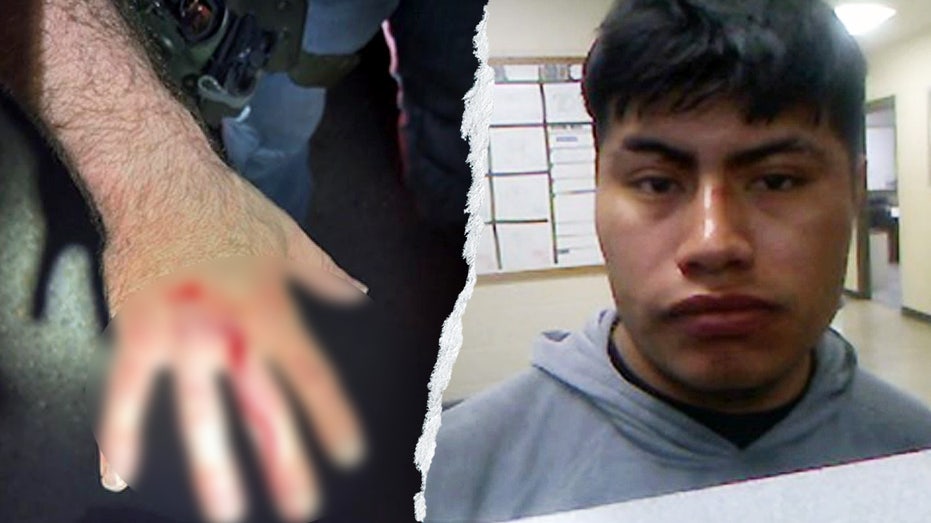
In Minneapolis, officials at Augsburg University actively attempted to obstruct ICE agents from arresting a student with a prior criminal record, even enlisting campus police to block their departure. The university president publicly praised the students’ actions, despite the suspect’s legal status and past offenses.
Finally, an internal review at Columbia University revealed a disturbing pattern of harassment targeting Jewish students in the wake of the conflict in Gaza. The report detailed instances of students being singled out, accused of being “murderers,” and subjected to antisemitic rhetoric from both classmates and, alarmingly, a faculty member.
These incidents, occurring across the country, paint a picture of escalating tensions and a growing struggle over the very soul of American education. They underscore the urgent need for open dialogue, mutual respect, and a renewed commitment to fostering environments where all students feel safe, valued, and free to express their beliefs.