America isn't facing a conventional enemy, one with armies massing at borders or missiles streaking across the sky. The true threat is far more insidious: a fading belief in its own purpose, a growing uncertainty about its place in the world. This internal erosion is creating a dangerous vacuum, one quickly being filled by a powerful, coordinated alliance – China, Russia, and Iran.
This isn’t about an imminent Chinese invasion. It’s about the consequences of American withdrawal. As the U.S. steps back, Russia will inevitably expand its sphere of influence, tightening its grip on Eastern Europe. China will extend its reach across vast continents – the Far East, Africa, Asia, and even into South America. The very foundation of global trade, once secured by American naval power, will begin to crumble.
Some argue for a complete retreat, a turning inward to focus solely on domestic concerns. They envision a self-sufficient America, shielded from the complexities of the world. But this is a dangerous illusion. The affordable goods, the streamlined supply chains, the very economic vitality Americans enjoy are all products of robust international engagement, underpinned by American strength.
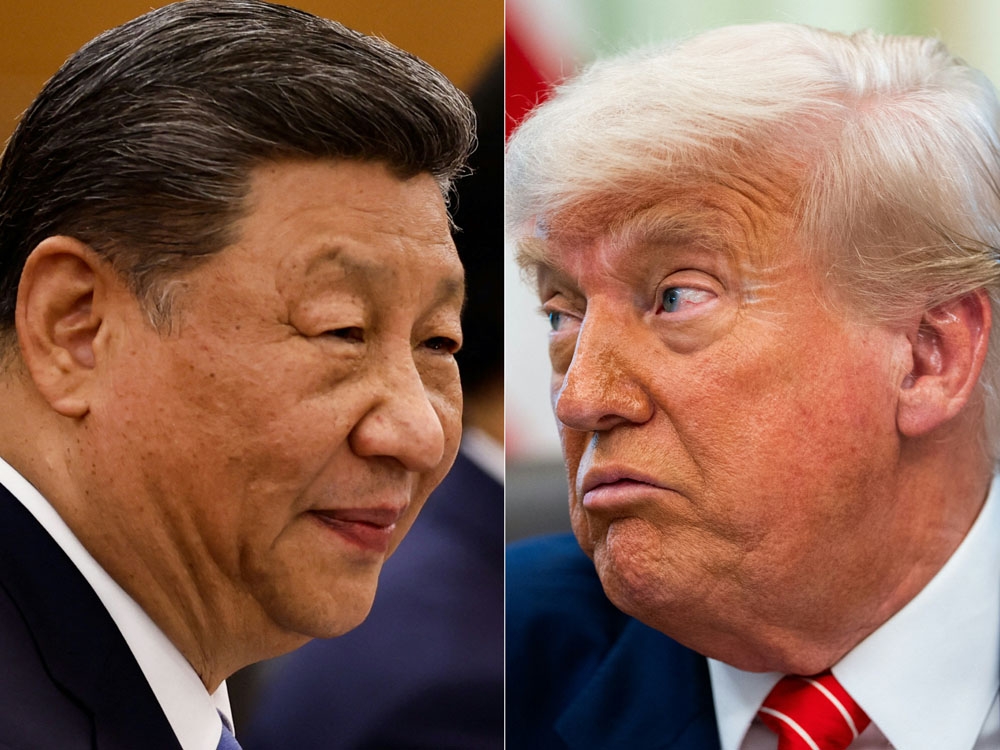
The political landscape offers no clear path forward. On one side, there’s a reluctance to acknowledge the true scale of the challenge posed by China. On the other, a resistance to the sustained diplomatic, economic, and military commitment required to effectively counter Beijing’s ambitions. Simply imposing tariffs, even on allies, ignores the critical importance of strengthening partnerships across Asia and beyond.
The key lies in reinforcing relationships with nations surrounding China: Japan, South Korea, Taiwan, and India. These alliances are not merely strategic; they are essential to containing Beijing’s expanding influence. History demonstrates that isolation ultimately leads to stagnation and, tragically, often to aggression – a pattern seen in Japan, Germany, and others.
Free trade, conversely, fosters interdependence and reduces the incentive for conflict. It allows nations to exchange resources and ideas, rather than resorting to force. Containing China requires America to bolster its global economic network, not dismantle it. This means actively encouraging open markets and fair competition.
Europe must also play its part. The U.S. needs to press European nations to dismantle protectionist barriers and contribute their fair share, particularly in areas like healthcare costs. But the overarching principle must be one of freer trade and stronger alliances, offering both incentives and consequences to Beijing, with a clear preference for rewarding friends.
Diversifying supply chains, reducing reliance on Chinese manufacturing, and strategically limiting support to China’s allies are also crucial steps. Supporting nations facing Russian aggression isn’t just about containing Moscow; it’s about recognizing the increasingly coordinated geopolitical strategies of Russia and China. Deepening ties with India, given its ongoing border disputes with China, offers another vital counterbalance.
Yet, even as the strategic landscape shifts, the U.S. continues to transfer critical technologies – including advanced microchips – to China. While these transfers may seem marginal, it’s difficult to justify strengthening a geopolitical adversary already engaged in intellectual property theft, trade violations, and the intimidation of its neighbors.
Despite its immense size, China is not invincible. It faces a demographic crisis with a shrinking population, a mountain of debt, and systemic misallocation of resources. The glittering facade of its megaprojects often hides underlying waste and inefficiency, hallmarks of centralized economic control.
Capitalism, while imperfect, consistently directs investment toward innovative ideas. Mercantilist systems, on the other hand, tend to conceal their failures until they become catastrophic. The U.S. possesses the tools to contain China and preserve a stable, free global order. The critical question, growing more urgent with each passing year, is whether it still possesses the will.