The modern workplace is undergoing a seismic shift, a transformation driven not by incremental changes, but by a relentless wave of technological innovation. Companies are no longer simply adopting new tools; they are fundamentally reimagining how they operate, how they empower their people, and how they compete in a rapidly evolving world.
This isn’t about automating tasks for the sake of it. It’s about unlocking human potential, freeing teams from the burden of repetitive work, and allowing them to focus on strategic initiatives that drive real growth. The organizations that embrace this change – that intelligently integrate cutting-edge technologies – are the ones poised to thrive.
Artificial Intelligence is leading the charge, particularly within HR departments. Forget tedious resume screening and initial candidate interviews. AI platforms now intelligently match skills to requirements, reducing bias and dramatically shortening the time it takes to find the right talent. This isn’t just about efficiency; it’s about building a more diverse and equitable workforce.
But AI’s impact doesn’t stop at hiring. It’s also being used to gauge employee sentiment, identify skill gaps, and even predict potential turnover. This allows HR leaders to proactively address concerns, offer personalized development opportunities, and foster a more engaged and satisfied workforce.
The rise of hybrid and remote work has made cloud-based employee management systems indispensable. These platforms provide real-time access to critical information – payroll, benefits, performance data – regardless of location. This fosters collaboration, streamlines compliance, and empowers both employees and managers with the tools they need to succeed.
Beyond simple access, these systems are becoming increasingly intelligent. Adaptive scheduling platforms leverage historical data and predictive algorithms to optimize labor needs, ensuring the right people are in the right place at the right time. Employees benefit too, with self-service tools that allow them to manage their schedules and preferences, promoting a healthier work-life balance.
Blockchain technology, initially known for powering cryptocurrencies, is now emerging as a powerful tool for enhancing security and transparency. In workforce management, it provides an immutable record of employee credentials, eliminating fraud and building trust. Across supply chains, it tracks products from origin to delivery, ensuring authenticity and accountability.
Looking further ahead, quantum computing promises to revolutionize strategic decision-making. By tackling complex modeling challenges that are beyond the reach of traditional computers, it can unlock insights in areas like supply chain optimization, risk analysis, and even pharmaceutical research. This isn’t science fiction; it’s a rapidly developing reality.
The Internet of Things (IoT) is connecting the physical workplace – machinery, HVAC systems, security devices – to data collection and AI-driven analytics. This allows for predictive maintenance, preventing costly equipment failures and minimizing operational disruptions. It’s about optimizing energy usage, boosting safety, and enhancing overall productivity.
However, all this innovation comes with a critical caveat: cybersecurity. As organizations become increasingly reliant on digital systems, they become more vulnerable to cyber threats. Robust security measures – multi-factor authentication, strong encryption, continuous monitoring, and ongoing employee training – are no longer optional; they are essential for protecting sensitive data and maintaining trust.
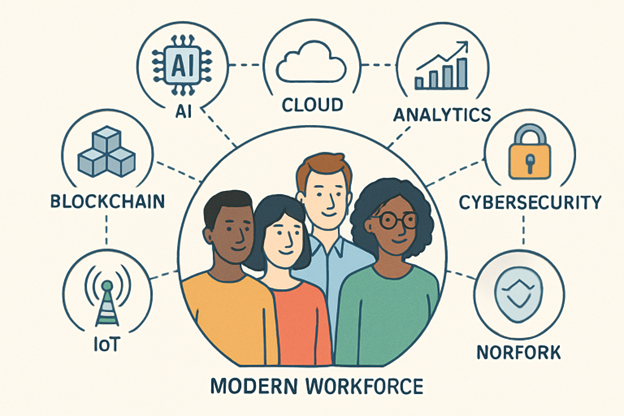
Ultimately, the future of work belongs to those who embrace these technologies, not as isolated solutions, but as interconnected components of a larger, more intelligent ecosystem. By seamlessly integrating AI, cloud computing, blockchain, quantum computing, IoT, and robust cybersecurity, organizations can unlock unprecedented levels of efficiency, responsiveness, and resilience.
This isn’t just about staying competitive; it’s about creating a workplace where people can thrive, where innovation flourishes, and where organizations are equipped to navigate the challenges – and seize the opportunities – of an ever-evolving world.