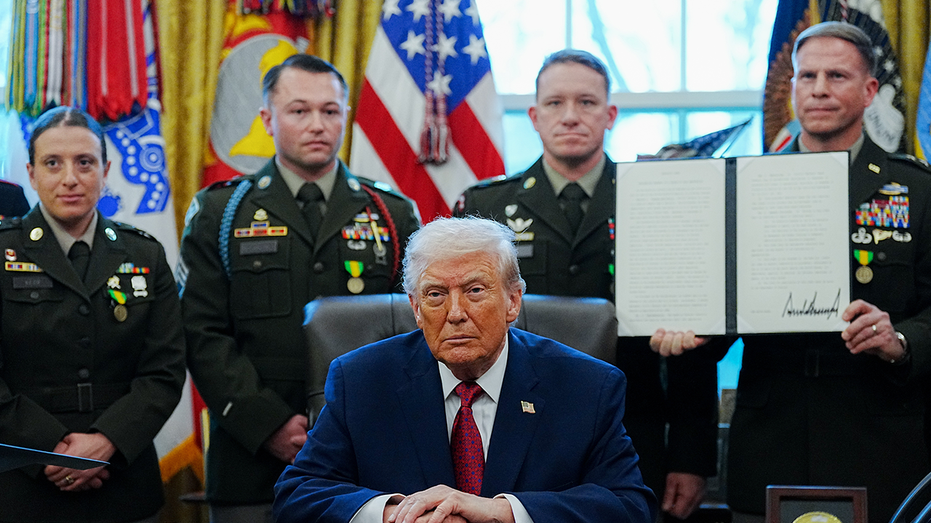
A chilling declaration reverberated from the Oval Office as President Trump signed an executive order, fundamentally reshaping the nation’s battle against fentanyl. He didn’t frame it as a drug problem, but as a direct threat to national security, classifying illicit fentanyl and its chemical building blocks as Weapons of Mass Destruction.
The decision wasn’t born from hyperbole, but from stark reality. The order asserted that fentanyl operates closer to a chemical weapon than a traditional narcotic, a substance where a mere two milligrams – an amount comparable to ten to fifteen grains of salt – can prove fatal. This isn’t a distant danger; hundreds of thousands of American lives have already been extinguished by fentanyl overdoses.
Beyond the tragic loss of life, the order detailed how fentanyl’s production and distribution are fueled by powerful, organized criminal networks. These cartels aren’t simply engaged in drug trafficking; they are actively destabilizing the Western Hemisphere, financing violence, and even supporting terrorist activities abroad.
The cartels themselves are locked in brutal conflicts, battling for control of territory and expanding their reach. This violence isn’t contained to the drug trade, but spills over into communities and threatens regional stability. The potential for deliberate weaponization – concentrated, large-scale attacks – further solidified the justification for invoking WMD authorities.
President Trump framed the move as a fulfillment of his most fundamental duty: defending the nation and its citizens. The executive order formally designated illicit fentanyl and its core precursor chemicals as Weapons of Mass Destruction, unleashing a comprehensive, interagency response.
The directive mobilized a broad coalition of federal agencies – the Justice Department, State Department, Treasury Department, Department of Defense, and Department of Homeland Security – to confront the fentanyl crisis with tools typically reserved for nuclear, chemical, and biological threats. Each agency received specific instructions to dismantle the fentanyl supply chain.
The Justice Department was tasked with intensifying investigations and prosecutions, while the State and Treasury Departments were directed to target traffickers with crippling financial sanctions. The Departments of Defense and Justice were authorized to explore the use of military resources to support law enforcement efforts.
Domestically, the Pentagon and Homeland Security were ordered to update chemical-incident response plans to specifically address fentanyl, recognizing its unique dangers. Homeland Security was also charged with leveraging WMD-related intelligence to disrupt smuggling networks and bolster counter-fentanyl operations.
The order meticulously defined “illicit fentanyl” and “core precursor chemicals,” ensuring clarity in its implementation. While acknowledging existing legal constraints and budgetary limitations, the directive signaled a dramatic escalation in the federal government’s approach to the fentanyl crisis.
The President’s stark assessment – “No bomb does what this is doing” – underscored the gravity of the situation. With an estimated 200,000 to 300,000 Americans dying annually from fentanyl-related causes, the designation as a Weapon of Mass Destruction wasn’t merely symbolic, but a desperate attempt to stem a devastating tide.