A wave of frustration crashed against the steps of the Ontario legislature Wednesday, as hundreds of students and their allies rallied against sweeping changes to the Ontario Student Assistance Program. The demonstration, punctuated by moments of tension and resulting in two arrests, underscored a growing fear: the dream of accessible education is slipping away.
The province recently announced a significant funding increase for colleges and universities, but this boost comes with a trade-off. A seven-year tuition freeze has been lifted, and, crucially, OSAP grants – the lifeline for many – are being dramatically reduced in favour of loans. This shift has ignited a firestorm of protest, with students warning of crippling debt and diminished opportunities.
“Rent is skyrocketing, groceries are becoming unaffordable, and students are working more hours just to stay enrolled,” explained Cyrielle Ngeleka, Ontario chairperson for the Canadian Federation of Students. “In a moment like this, the last thing students need is for the cost of education itself to rise. Education should be a pathway out of precarity, not another bill students are expected to absorb.”
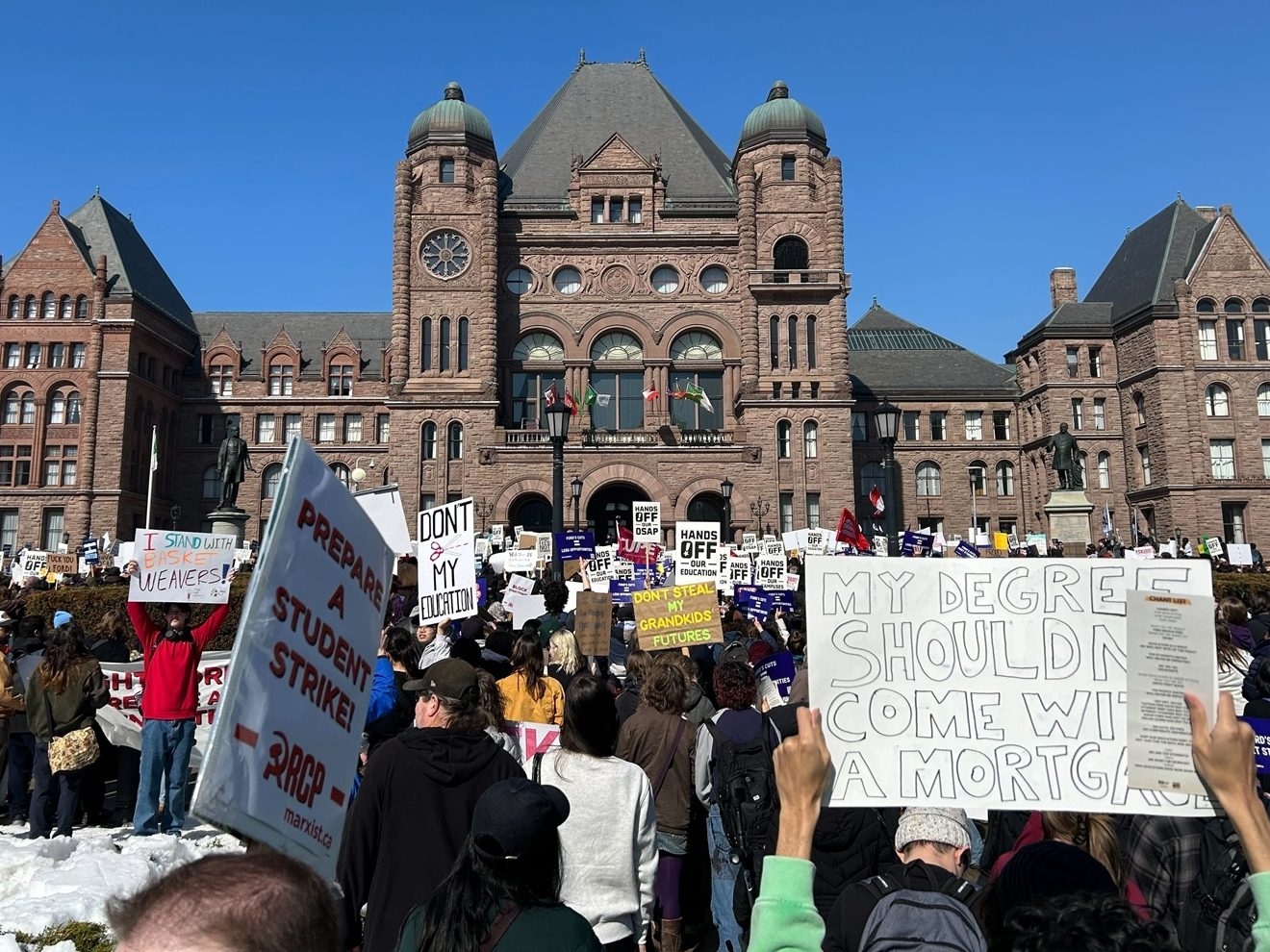
The atmosphere at the protest grew charged as demonstrators confronted a line of police officers guarding the legislature. A statue of George Brown was defaced with angry slogans directed at Premier Doug Ford, a stark visual representation of the mounting discontent. While most protesters eventually dispersed peacefully, the underlying anger remained palpable.
Adam Picardo, a Toronto Metropolitan University student, held a sign that cut to the heart of the matter: “My degree shouldn’t come with a mortgage.” He faces the prospect of graduating with tens of thousands of dollars in additional debt, a burden he fears will be insurmountable. “Some days I’m already skipping meals,” he confessed.
Picardo, a mature student supporting himself, painted a grim picture. He worries about the escalating costs of each subsequent year. “I can’t graduate with $50,000, $60,000 in debt,” he stated, his voice reflecting the anxiety shared by countless others.
The changes represent a dramatic reversal of recent OSAP policy. Currently, approximately 85 per cent of student financial aid is provided as grants, with only 15 per cent as loans. Starting this fall, that ratio will flip, with grants capped at a maximum of 25 per cent.
The government defends the overhaul, citing the financial “unsustainability” of the current system. Spending on OSAP grants alone reached $1.7 billion last year, a staggering 143 per cent increase since 2020. Officials point to a surge in applications from career college students as a major driver of this cost increase.
However, for students like Bethany Campbell, a first-year journalism student, the statistics offer little comfort. She fears she’ll be forced to abandon her studies or work full-time, jeopardizing her academic success. “If my OSAP becomes mostly loans, I’ll be taking on almost $80,000 just to finish my four-year program,” she said.
Coming from a low-income family, Campbell sees a bleak future. “I don’t have money to fall back on,” she explained. “I’m going to either be in debt for the rest of my life or I’m going to have to drop out of school.” Her story is a powerful illustration of the difficult choices facing a generation striving for a better future.