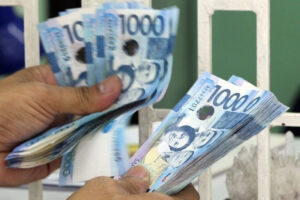
The Philippine peso experienced a significant drop against the US dollar on Tuesday, succumbing to mounting anxieties surrounding the escalating conflict in Iran. The currency closed at P58.435 to the dollar, a decline of 23.5 centavos from Monday’s close.
Trading began with a slight weakness, opening at P58.22, but quickly deteriorated as concerns over oil prices intensified. Throughout the day, the peso fluctuated between P58.17 and a low of P58.478, reflecting the volatile market sentiment.
The primary driver behind the peso’s decline was the surge in global oil prices, triggered by heightened tensions in the Middle East and threats to crucial shipping lanes. The Philippines, heavily reliant on imported oil, is particularly vulnerable to these price increases.
Specifically, the potential closure of the Strait of Hormuz – a vital artery for global oil transport – sent shockwaves through the market. This threat immediately impacted shipping costs, with supertanker rates soaring to unprecedented levels, exceeding $400,000 per day.
Brent crude futures climbed another 2.3% to $79.50 a barrel, adding to the substantial gains seen on Monday. Natural gas prices also experienced a dramatic surge, jumping around 40% in both European and Asian markets.
These escalating energy costs pose a significant threat to businesses across Asia, potentially eroding profits and dampening the recent stock market rally. The ripple effects could be felt throughout the region’s economies.
The situation also complicates the efforts of the US Federal Reserve to manage inflation. Policymakers are already grappling with the economic impact of artificial intelligence, and rising oil prices add another layer of complexity to their decisions.
Market analysts predict continued volatility in the peso’s value, with expectations for Wednesday ranging between P58 and P58.60 per dollar. Another forecast anticipates a range of P58.30 to P58.55, indicating ongoing uncertainty.
The US dollar itself gained strength as investors sought a safe haven amidst the geopolitical turmoil. The US dollar index, measuring its performance against a basket of major currencies, reached a six-week high, while US Treasury bond yields also edged upward.
Statements from US officials, including signals of a potentially prolonged conflict, further fueled market anxieties and supported the dollar’s rise. The prospect of a wider war in the region continues to weigh heavily on global markets.
Iran’s Revolutionary Guards have explicitly stated the Strait of Hormuz is closed to marine traffic, threatening to fire upon any vessel attempting passage. This aggressive stance underscores the severity of the situation and the potential for further disruption.
As a result, the probability of the US Federal Reserve maintaining current interest rates at its upcoming meeting has increased significantly, nearing 95.4%. The possibility of rate cuts in June, previously considered more likely, has diminished.
The confluence of these factors – geopolitical tensions, rising oil prices, and shifting expectations for monetary policy – creates a challenging environment for the Philippine peso and the broader global economy.