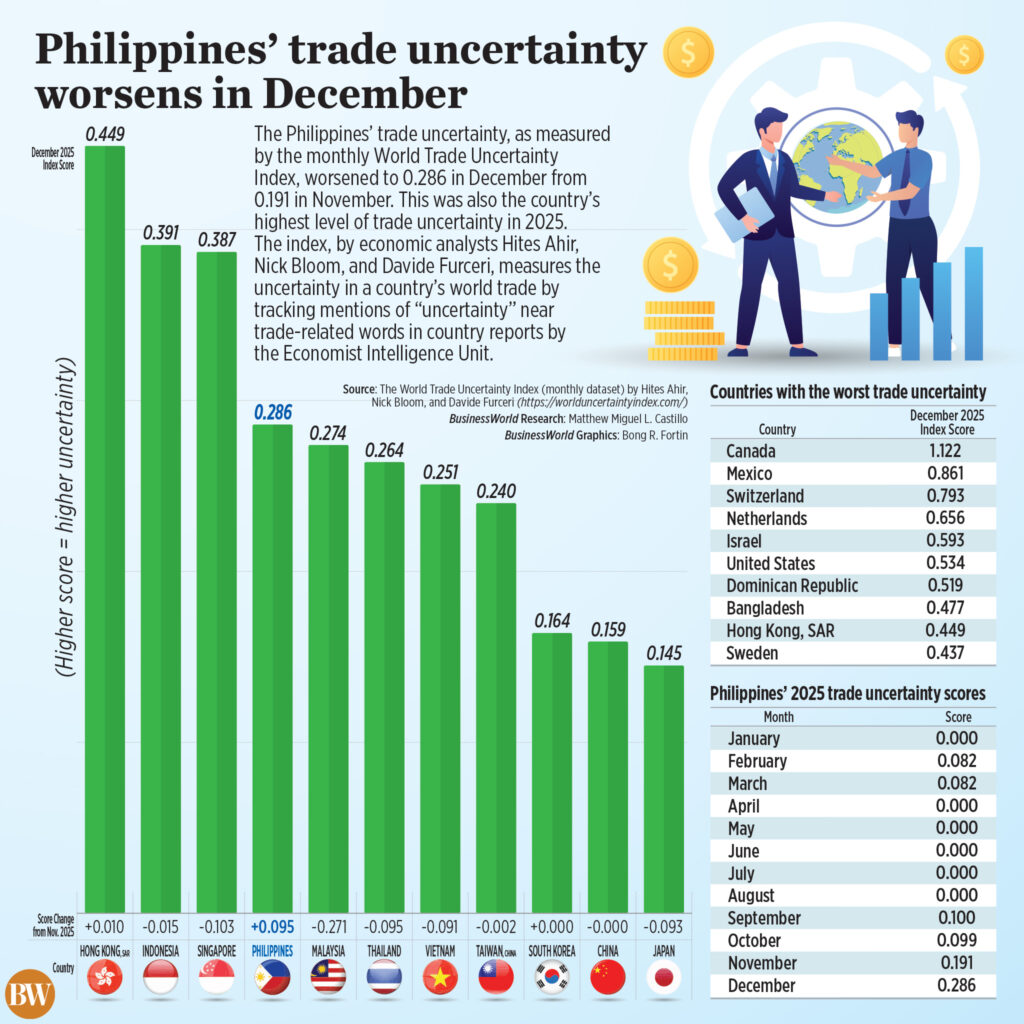
A chilling current of economic anxiety swept through the Philippines in December, reaching its peak for the entire year. The nation’s trade uncertainty, a carefully measured metric, surged dramatically, signaling growing concerns about the future of global commerce. This wasn't a subtle shift; it was a pronounced jump, raising questions about the stability of international markets.
The World Trade Uncertainty Index, a sophisticated tool developed by leading economic analysts, revealed the unsettling trend. Climbing from 0.191 in November to 0.286 in December, the index paints a picture of escalating apprehension among businesses and policymakers. This represents the highest level of trade uncertainty the Philippines has experienced throughout 2025.
But how is this uncertainty actually *measured*? The index doesn’t rely on surveys or predictions. Instead, it meticulously scans reports from the Economist Intelligence Unit, searching for the frequency with which “uncertainty” appears alongside terms related to international trade. A higher count suggests a greater level of concern and potential disruption.
This isn’t simply an abstract number; it reflects real-world anxieties. Businesses hesitate to invest, supply chains become strained, and economic growth can be stifled when the future of trade feels precarious. The December spike suggests a growing sense that the established rules of global commerce are under threat.
The implications of this heightened uncertainty are far-reaching. It could impact everything from the price of goods to the availability of essential resources. Understanding this trend is crucial for navigating the complex economic landscape and preparing for potential challenges ahead.